The Role of Specialized AV Integrators in Government Security and Compliance
Brad Rojas
Government audiovisual environments are not built solely for convenience or aesthetics. They exist to support public safety, critical infrastructure, emergency response, healthcare operations, and law enforcement. That reality places government AV systems in a completely different category than corporate boardrooms or commercial conference spaces, especially when it comes to security.
Unlike private sector environments, government agencies operate under strict policies, procurement regulations, and long-term operational mandates. Every technology decision must balance security, transparency, accountability, and continuity. AV systems are no exception.
Designing AV Systems for Secure Government and Public Safety Environments
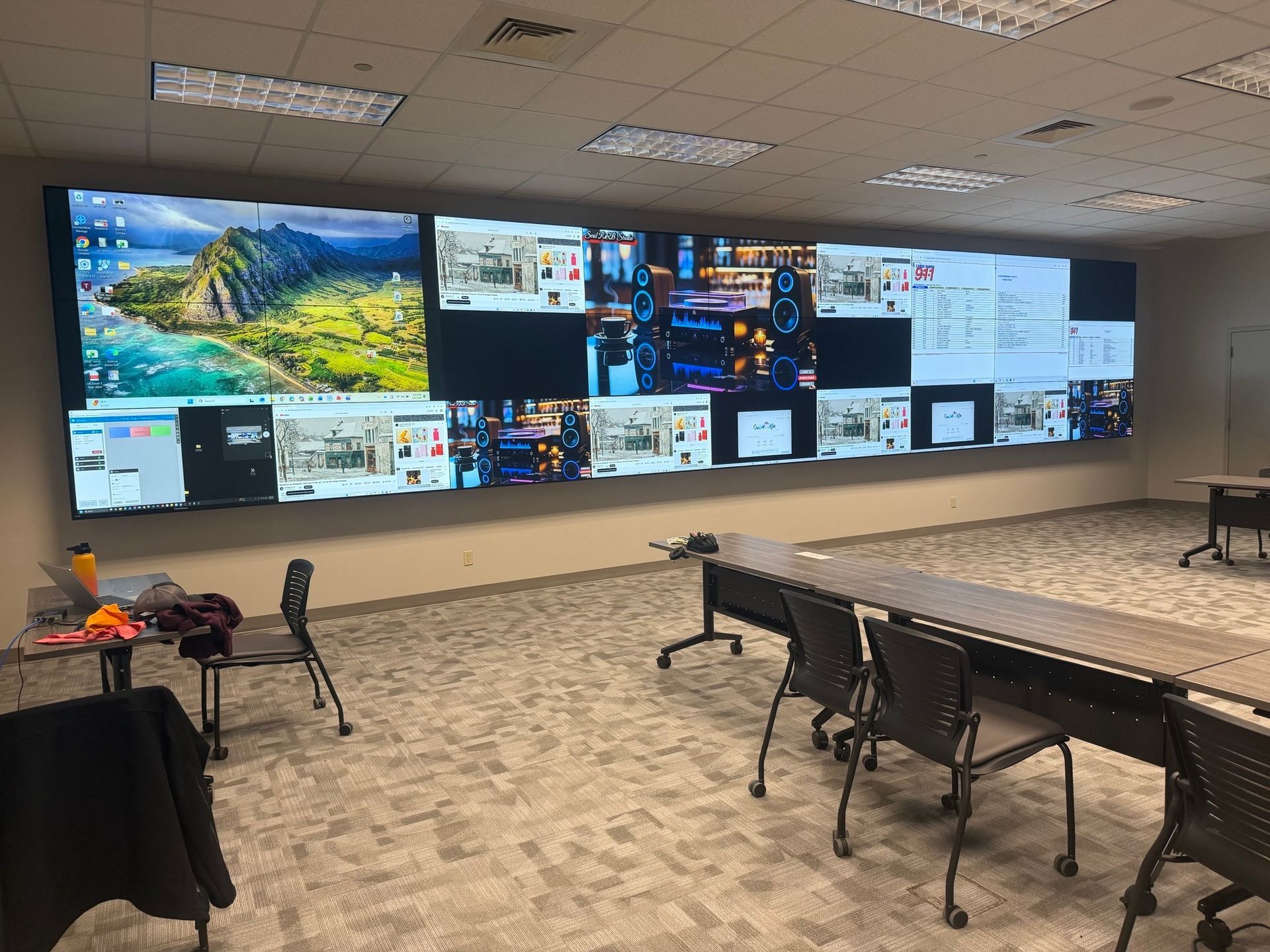
Government facilities support mission-critical operations tied to public safety, emergency response, healthcare, utilities, and law enforcement. In these environments, AV systems are routinely used to display and transmit sensitive or regulated information, including:
- live surveillance feeds
- emergency response data
- protected health information
- law enforcement intelligence
Any vulnerability in an AV system can serve as an entry point into the broader IT network, increasing risk across the entire organization.
This reality changes how government AV systems must be designed. AV technology is no longer a standalone solution; it is a
network-connected endpoint that must align with cybersecurity frameworks, network segmentation, identity management, and access controls.
Designing systems at this level requires expertise beyond basic installation and a deep understanding of how AV technology interacts with enterprise IT environments and compliance requirements.

Procurement and Compliance Requirements Impact System Design
Government agencies cannot simply select the newest or most convenient solution on the market. Procurement processes often require documented security standards, vendor vetting, and compliance with local, state, or federal regulations.
Specialized government AV experts design systems that meet these requirements from the start. They consider approved manufacturers, long-term support commitments, and documented security practices. This prevents delays, rework, or rejected installations that can occur when systems fail to align with procurement expectations.
Compliance is not static. Regulations evolve, and AV systems must be able to adapt without major overhauls.
Planning AV Systems for Long-Term Security and Compliance
One of the biggest differences between government and commercial AV environments is lifecycle expectations. Government systems are often expected to remain operational and secure for many years.
Experienced government AV integrators plan for:
- Ongoing software updates and security patches
- Hardware refresh cycles that do not disrupt operations
- Future expansion or system scaling
- Changes in compliance or reporting requirements
Without this forward-looking approach, agencies risk deploying systems that become outdated, unsupported, or vulnerable long before their useful life should end.
How Usability Affects Security in Government AV Systems
Security and usability are closely linked. When systems are difficult to operate, staff may unintentionally create workarounds that undermine security.
Specialized government AV design balances security with usability. Clear interfaces, role-based access, and thoughtful system layouts help ensure staff can operate systems correctly, even in high-pressure situations such as emergency operations or multi-agency coordination.
Why Government AV Systems Require Purpose-Built Solutions
Many commercial AV solutions are built for speed and flexibility, not policy alignment or long-term compliance. Without customization, training, and ongoing support, these systems can introduce compliance gaps and operational risk.
Government agencies need AV systems that are:
- Designed around policy and security requirements
- Integrated with existing IT infrastructure
- Supported long after installation
- Easy to use without compromising safeguards
These needs demand specialized expertise.
Why Government AV Security Requires Specialized Integration Expertise
In government environments, AV security is not a one-time decision. It is an ongoing operational responsibility. Systems must remain secure, compliant, and reliable long after installation, even as policies evolve, technology changes, and operational demands increase.
That is where specialized expertise matters. The right AV partner understands how government agencies actually operate and designs systems to support those realities over the long term.
Partner with Link Integration to Support Mission-Critical Government Operations
At Link Integration Group, government AV projects are approached as long-term partnerships, not transactional installs. Our team works alongside agencies to educate stakeholders, align technology with policy, and design solutions that integrate cleanly with existing IT and security frameworks. From planning and design through implementation, training, and ongoing support, we stay engaged to ensure systems continue to perform as intended.
By combining deep technical knowledge with real-world experience in government operations, Link Integration Group helps agencies deploy AV systems that are resilient, secure, and built to support mission-critical work.
If your agency is planning a new AV system or reassessing an existing one, partnering with an experienced government AV integrator is essential. Link Integration Group is ready to help you build solutions that meet today’s security requirements and adapt to tomorrow’s operational needs.