Emergency Operations Center Technology: The Power of the Right Partnership
Brad Rojas
When you work in emergency management long enough, you learn that things rarely go exactly according to plan.
Tony LeBlanc knows that firsthand. As deputy director of emergency management for Caddo Parish, he has spent more than 15 years in emergency management and more than four decades in law enforcement. During that time, he has seen tornadoes, river flooding, ice storms, utility failures, and other emergencies affect North Louisiana.
The job also extends beyond disasters. Major public events such as Shreveport’s Mardi Gras celebration can bring approximately 150,000 people across more than six miles of parade route. Tony and his team had the experience to manage those situations. What they needed was an Emergency Operations Center with technology that could keep pace.
Finding that solution would ultimately become a nearly two-year journey with Link Integration Group.
Why Does an Emergency Operations Center Need Integrated AV Technology?
An Emergency Operations Center needs integrated AV technology so personnel can view critical information from multiple sources without constantly switching systems or removing something else from view.
For Caddo Parish, the existing EOC made that difficult—four ceiling-mounted projectors limited personnel to four primary sources at a time.
With only four projectors, every new source of information forced the team to decide what to remove from the screen. During an active emergency or large public event, that could make it harder to maintain a complete view of what was happening across the parish.
Personnel needed to bring in new camera feeds, weather information, or operational data without losing visibility into something else that was already important.
“Our biggest concern was making sure we had all the information needed to understand what was happening across the parish,” LeBlanc said.
That concern became the driving force behind the project. Caddo Parish was not looking for new technology simply because its equipment was getting older. Tony and his team needed a better way to see the information they already depended on.

What Are the Limitations of an Outdated Emergency Operations Center?
An outdated Emergency Operations Center can limit how much information personnel can view at once and make it harder to maintain situational awareness during an active event.
That was the challenge Caddo Parish faced with its four-projector setup. If personnel wanted to add another camera feed or open a different operational source, they usually had to remove something else first. The room could still function, but the technology forced the team to work around it.
For an emergency-management team, those limitations matter. Personnel need the freedom to bring new information into the room as conditions change without sacrificing visibility into something they are already monitoring. Caddo Parish needed a system that could expand with the amount of information available to the team rather than restrict it.
How Do You Choose the Right Emergency Operations Center Technology Partner?
The right Emergency Operations Center technology partner should understand how the organization operates and be able to design technology around those real-world requirements.
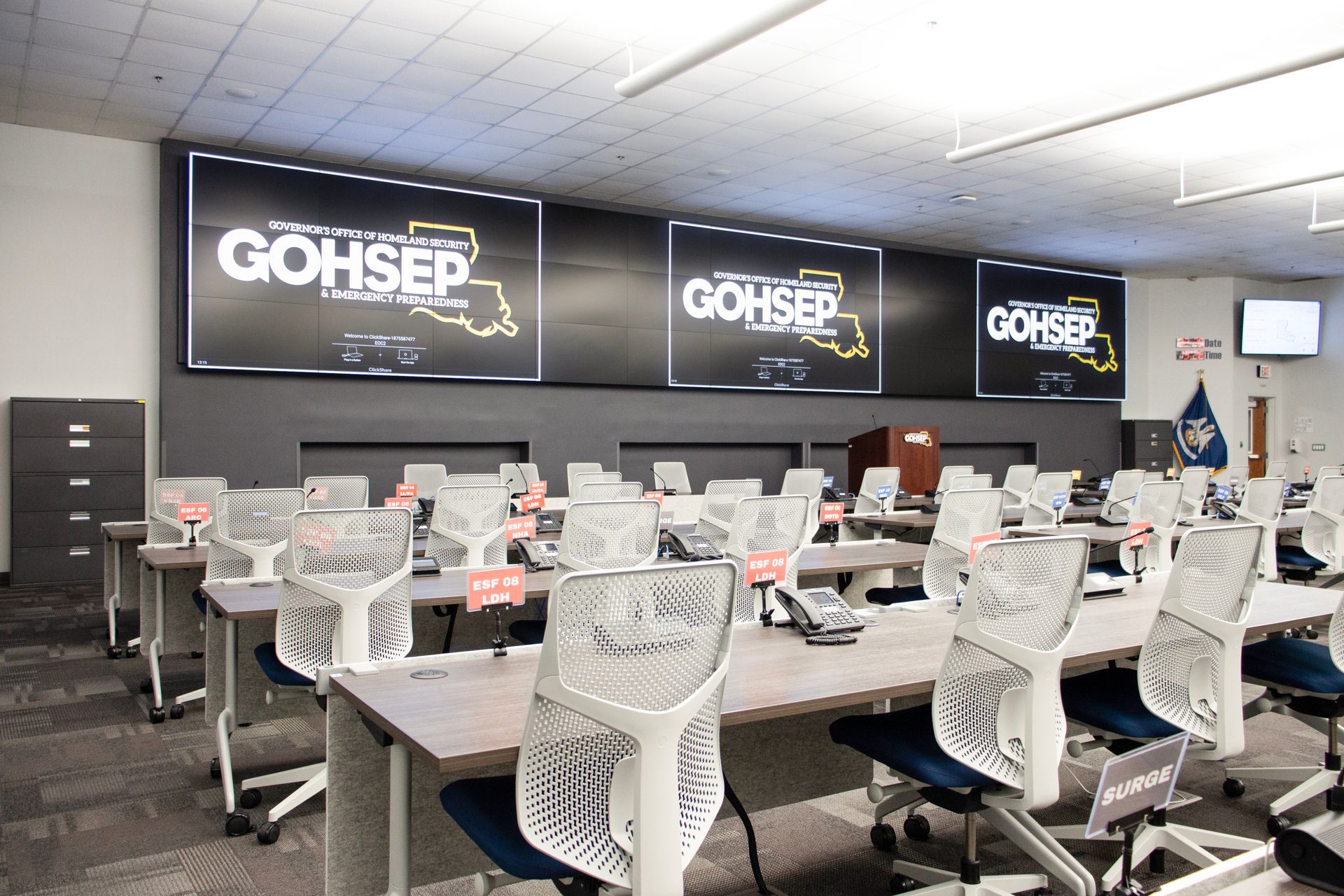
Caddo Parish first saw what was possible during a visit to the Louisiana Governor’s Office of Homeland Security and Emergency Preparedness headquarters in Baton Rouge.
“We didn’t know exactly what was out there until we got to see what was going on at the main headquarters in Baton Rouge,” LeBlanc said. “That allowed us to see that we could have multiple things on the screen instead of being limited to four.”
That visit gave the parish a clearer idea of what it wanted its own EOC to become. Caddo Parish later reconnected and began engaging more closely with the Link Integration team at the Louisiana Emergency Management Conference (LEMC).
Those conversations focused less on individual pieces of equipment and more on how the room needed to work. Tony and his team understood the operational side because they had lived it. Link Integration could take that experience and determine how technology should be designed around it.
That approach became especially important as the project moved forward and the purchasing timeline changed.
How Can Grant Requirements Affect an Emergency Operations Center Upgrade?
Grant requirements can affect the timing and purchasing structure of an Emergency Operations Center upgrade, making flexibility from the technology partner especially important.
For Caddo Parish, federal grant criteria shaped how and when portions of the project could be purchased. Link Integration did not help manage the grant itself, but the team remained closely involved as Caddo Parish worked through those requirements.
As purchasing timelines changed, Link Integration stayed flexible and continued working with the parish to protect the original vision for the EOC.
Rather than forcing the project into a rigid plan, the two teams restructured the work under the same contract into four phases. That flexibility gave Caddo Parish a practical way to move forward while still working toward the system it had originally envisioned.
Over nearly two years, the timing changed more than once, but the partnership stayed consistent. Link Integration continued adjusting the plan, advising on purchasing options and helping Caddo Parish move forward as each phase became possible.
By the time installation began, Link Integration had gained a deep understanding of how the parish operated and what Tony’s team ultimately needed from the room.
The original vision had not been compromised to fit the purchasing process. The purchasing approach had been adapted so the vision could become a reality.
How Can an Emergency Operations Center Be Customized for Its Users?
An Emergency Operations Center can be customized by designing displays and controls around the specific information personnel need to monitor and how they prefer to manage it.
For Caddo Parish, that meant replacing the four-projector setup with a large-format video wall that can display information from several operational sources at once.
Personnel could now bring together live drone footage, security cameras, weather information, and active 911-call data without constantly deciding what to remove from view.
Caddo Parish also had a more specific request. Tony’s team wanted a 43-inch operator monitor that could show four separate computer outputs on a single screen. This would allow personnel to prepare camera feeds or browser-based information before deciding what should appear on the larger video wall. The four-view configuration was not standard, so Link Integration engineered the system around the parish’s workflow.
“We now have a 43-inch monitor where we can see four separate screens on that monitor, on top of everything else we have on the big screen,” LeBlanc said.
It was a straightforward example of how the partnership worked. Caddo Parish explained how it wanted the room to function, and Link Integration found a way to make the technology support it.
How Do You Make Complex EOC Technology Easy to Use?
Complex EOC technology becomes easier to use when controls are designed around the actions personnel perform most often instead of exposing users to the complexity behind the system.
That mattered because a more capable system could easily have created a new obstacle. Tony and his team wanted access to far more information, but they did not want personnel struggling with complicated controls while an emergency was unfolding.
Link Integration used touch-panel controls to simplify the experience. Behind the scenes, the system could manage numerous sources and displays. From the operator’s perspective, choosing what should appear on screen could be as simple as pressing the appropriate source on the touch panel.
Deputy John Lane remembers initially looking at the upgraded system and wondering how he would learn it all. Working directly with Brent Gay of Link Integration helped change that.
“When Brent Gay from Link Integration came in, he made it easy and simple,” Lane said. “The things I know and the things I’ve learned, I credit Brent for that.”
The sophistication remained in the system. The difficulty didn't have to stay with the user.
How Can Wireless Screen Sharing Improve an Emergency Operations Center?
Wireless screen sharing can make an Emergency Operations Center easier to use by allowing staff and visiting agencies to display information without disconnecting equipment or changing cables.
For Caddo Parish, that capability came through Barco ClickShare. Tony has his own name for the ClickShare button. He calls it the “hockey puck.”
“We take the puck, plug it into somebody’s laptop, and they can share what they have without disconnecting one of our HDMI cables,” LeBlanc said.
The nickname may be lighthearted, but the feature solved a practical problem. Before ClickShare, bringing another laptop into the room could mean figuring out which connection to use or what to disconnect. Now a user can plug in the button, click it, and put the screen in front of the room.
For an EOC shared by multiple agencies and used for emergency activations, meetings, and training, removing that extra step makes the room noticeably easier to use.
How Should an AV Integrator Handle Unexpected Installation Challenges?
An AV integrator should respond to unexpected installation challenges by adapting the project plan without losing sight of the client’s operational deadline.
After working through the purchasing process, Caddo Parish and Link Integration finally reached installation with an important target in front of them. The new EOC needed to be operational before Mardi Gras season.
Then an ice storm hit North Louisiana.
The weather delayed Link Integration’s access to the site and compressed an already tight installation window.
But flexibility had already become part of the way the two teams worked together. Link Integration adjusted the installation schedule and continued moving toward the same deadline.
The EOC was operational in time for Mardi Gras. It was another example of the partnership that had developed throughout the project. Circumstances changed, but Link Integration adapted without losing sight of what Caddo Parish needed to accomplish.
How Can EOC Technology Improve Situational Awareness During Large Events?
EOC technology can improve situational awareness during large events by bringing multiple live information sources into one environment where personnel can compare them and see a broader picture.
Shreveport’s Mardi Gras celebration provided an immediate example. The event can attract approximately 150,000 people across a parade route stretching about six and a half miles. No single camera can show everything happening across an area that large.
With the upgraded EOC, Caddo Parish could bring live drone footage and security-camera feeds directly into the room.
“The ability to live-feed cameras and drone footage directly into our EOC has made a big difference,” LeBlanc said.
A drone operator may be focused on one section of the route while someone monitoring a security camera is watching another. Inside the EOC, Tony and his team can see those feeds together.
“The people operating a drone or camera may be focused on one area, but our team can review the larger picture and alert them when we notice something developing,” LeBlanc said. “Having access to those different views has made a world of difference.”
That is what the technology was intended to accomplish. It does not replace the emergency-management team's experience. It gives them a more complete picture to work from.
What Are the Benefits of a Long-Term AV Integration Partnership?
A long-term AV integration partnership gives an organization a technology team that understands its needs and can adapt as circumstances change throughout a project's lifecycle.
Caddo Parish’s experience with Link Integration showed what that can look like in practice.
When grant requirements changed the purchasing timeline, Link Integration helped restructure the project into four phases while preserving the parish’s original goals.
When Caddo Parish wanted a four-view operator monitor that did not fit a standard configuration, Link engineered it around the parish’s workflow.
When an ice storm disrupted the installation schedule, the team adapted and still had the EOC ready for Mardi Gras.
The relationship continued through training and support after the system was installed.
“It has basically brought us into the 21st century,” LeBlanc said.
The finished video wall may be the most visible result of the project, but it is only part of the story. The larger value came from having a technology partner willing to remain flexible and work alongside Caddo Parish until the system it originally envisioned became a reality.
That is where the difference between a vendor and a partner becomes clear.
What Should You Look for in an Emergency Operations Center AV Partner?
An Emergency Operations Center AV partner should understand the organization’s workflow, design around its operational needs, and remain flexible throughout the project lifecycle.
An EOC is not a standard conference room, and building one is rarely a simple equipment purchase.
Funding requirements may affect the schedule. An organization may need a workflow that does not fit an off-the-shelf design. Unexpected challenges can arise during installation.
A strong integration partner should be able to adjust to those changes without losing sight of what the organization is trying to accomplish.
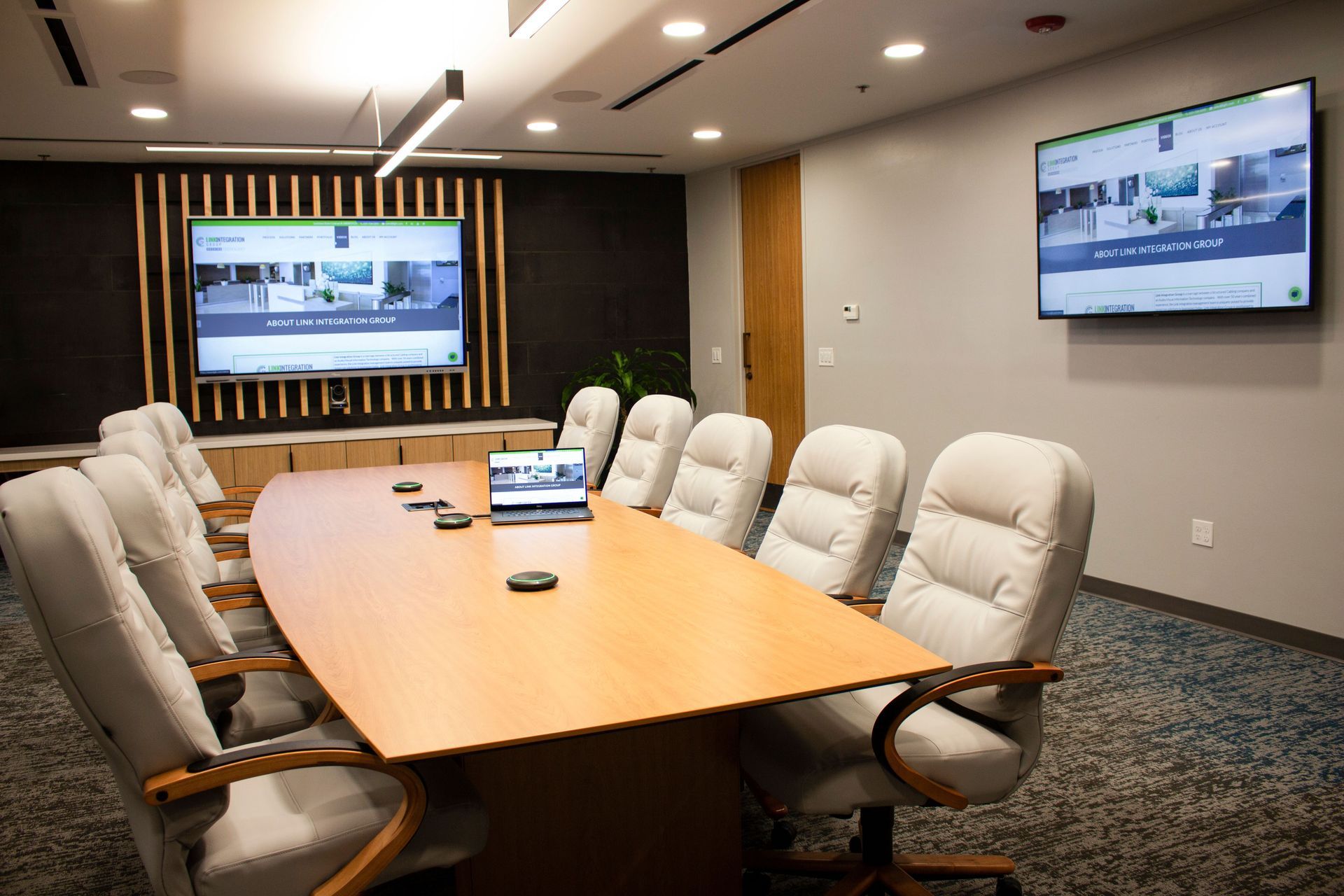
Link Integration Group designs, installs, and supports customized audiovisual and command-center systems for government and public-safety organizations. The process begins with understanding how the organization works, then continues through planning, purchasing, engineering, and installation. Training and ongoing support remain part of the relationship after deployment.
Caddo Parish’s journey lasted nearly two years, but the vision remained consistent because the partnership was flexible enough to evolve around it.
Your agency may face different challenges, but the goal remains the same. You need a reliable system and a technology partner your team can depend on when the pressure is highest.
Talk with Link Integration about a customized Emergency Operations Center or command-center solution built around the way your agency works.