How Can Control Room Technology Improve Situational Awareness?
Brad Rojas
Control room technology can improve situational awareness by bringing critical data, video, communications, and alerts into an integrated environment where operators can quickly understand what is happening and determine what requires attention.
Better situational awareness does not necessarily come from adding more screens or displaying more information. In the control rooms we evaluate, the problem is often not a lack of information. Operators may already have access to cameras, system data, alerts, maps, and communications, but those sources are spread across different systems or presented in ways that make them harder to use together.
At Link Integration Group, we design and integrate control room and command-center technology for organizations that depend on real-time information and reliable communication. That experience has shown us that technology works best when it is designed around how people actually use the room.
What Does Situational Awareness Mean in a Control Room?
Situational awareness in a control room means giving operators the information they need to understand current conditions, recognize important changes, and make informed decisions about what happens next.
Depending on the organization, that information might include live camera feeds, operational data, maps, weather information, system alerts, dashboards, or communications.
Access to those sources alone is not enough. Operators need to understand how different pieces of information relate to one another.
A camera may provide a live view of one location, while an alert identifies a developing issue and operational data provides additional context. When operators can view and interpret those sources together, they have a more complete picture to work from.

Can Too Much Information Hurt Situational Awareness?
Too much information can make situational awareness harder when operators have to sort through unnecessary data, constantly switch between sources, or decide which alerts require attention.
A common limitation in existing control rooms is that systems were added at different times, creating separate interfaces, displays, and controls that operators must manage individually. Some information belongs at individual workstations. Other sources may need to appear on a shared display so everyone in the room has the same operating picture. Priorities may also change during an emergency or other major event.
The goal is not to put everything on screen. The goal is to make the right information easier to find when needed.
How Can Video Walls and Data Visualization Improve Situational Awareness?
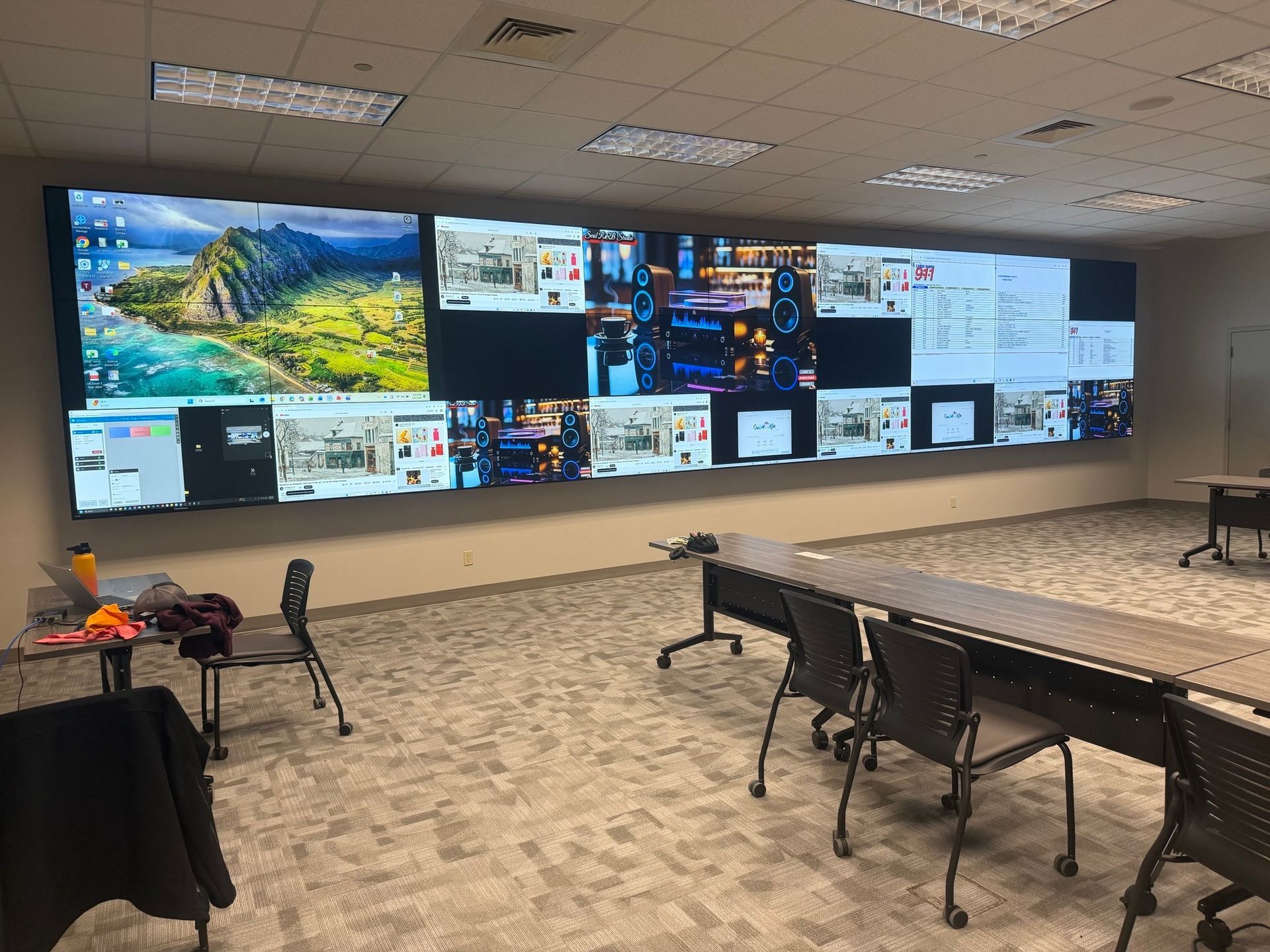
Video walls and high-definition displays can improve situational awareness by organizing multiple information sources into clear visual formats that operators can monitor and understand. The value of a video wall is not simply its size or the number of sources it can display. What matters is how that information is organized and how easily the configuration can change.
During normal operations, a team may rely on one arrangement. During an emergency, equipment failure, security event, or other developing situation, priorities can shift quickly. That flexibility became important in Link Integration’s work with Lafayette Utilities System. LUS had previously relied on a static LED map board that provided useful information but could not easily adapt as operating needs changed. The new visual environment lets operators change what is displayed based on the situation, including normal operations, outages, and severe weather.
A configurable visual environment lets the room adapt to those priorities while giving operators a shared view of the information that matters most.
Why Should Audio and Alarms Be Integrated Into a Control Room?
Audio and alarms can strengthen situational awareness by giving operators additional ways to recognize important events without relying entirely on visual displays. Operators cannot watch every screen every second. An audio notification or alarm can call attention to a condition that needs review while someone is focused elsewhere.
More alerts, however, are not automatically better. If every notification competes for attention, important information can become harder to distinguish. Audio and alarm systems should be designed around what operators need to know, who needs to receive the information, and how urgently they need it.
How Can Integrated Controls Make a Control Room Easier to Use?
Integrated control systems can make a control room easier to use by giving operators a centralized way to manage displays, information sources, audio, and other technology.
Without integration, operators may need to switch between different applications, remotes, or interfaces just to manage the room.
During system design, the goal is not to expose operators to every available technical capability. The goal is to simplify the actions they perform most often, such as changing a display source, adjusting a room layout, sharing information, or responding to an alarm.
That simplicity matters most in high-pressure situations. Operators should be focused on understanding what is happening, not figuring out how to operate the technology.
The technology behind the room may be complex. Using it should not have to be.
How Should Control Room Technology Support Emergency Operations?
Control room technology should support emergency operations by letting teams quickly access key information, adjust displays, communicate, and maintain a clear operating picture as conditions change.
An emergency can place very different demands on a room than everyday operations. More information may begin flowing into the control center, additional camera feeds may become important, or different departments and outside agencies may need to communicate.
At Lafayette Utilities System, that need becomes especially clear during severe weather. Tyler Delcambre described the operations center as becoming the central hub for communications during a storm, making the ability to change displays, monitor conditions, and distribute critical information especially important.
Reliability also becomes especially important. Network infrastructure, redundant connectivity, communication systems, displays, and controls all affect whether operators can keep accessing the information they need.
Link Integration has designed command-center technology for government, public safety, and emergency-response environments where reliable communication and access to real-time information are critical. That is why emergency scenarios should be considered during control room planning and design, not after the system has already been installed.
Why Should Control Room Technology Be Designed Around Operator Workflows?
Control room technology should be designed around operator workflows because the system's effectiveness ultimately depends on how easily people can use it to do their jobs.
Instead of beginning with questions about display sizes or equipment, control room planning should begin with how the room operates.
What information do operators monitor? Which sources need to be shared? What actions do employees perform most frequently? How does the workflow change during an emergency? Where does existing technology create unnecessary steps?
From Link Integration’s perspective, those workflow questions should come before choosing a product. A video wall, control platform, or communication system creates value only when it supports how operators actually monitor information and make decisions.
At Link Integration, the commercial AV process begins with consultation and a needs assessment before moving into system design and engineering. This lets the technology be selected and configured around the organization's requirements, rather than designing the operation around a predetermined equipment list.
Why Do Training and Ongoing Support Matter?
Training and ongoing support help keep control room technology usable and dependable long after installation.
Training gives operators time to get comfortable with controls, display configurations, communication tools, and other technology before they need to rely on those systems in a high-pressure situation.
Support is just as important once the room is operational. Link Integration provides onsite and remote support, along with options for proactive monitoring and preventative maintenance.
Link Integration continues to support Lafayette Utilities System after the original installation, and the relationship has expanded into other areas of the facility, including the dispatch room, training center, conference areas, and customer service center.
A control room should not only work on the day it is commissioned. The technology must keep performing as operational requirements and systems evolve.
How Do You Know If Your Control Room Technology Needs Improvement?
Control room technology may need improvement if operators regularly struggle to access, share, organize, or act on important information.
That does not automatically mean the entire room needs to be rebuilt. The problem could be aging displays, complicated controls, disconnected systems, limited infrastructure, or difficulty sharing information across the room.
Organizations evaluating an existing control room should consider:
- Can operators quickly access the information they use most?
- Can important information be shared across the room?
- Can display layouts change for different operating scenarios?
- Are audio and alerts reaching the appropriate people?
- Are operators switching between too many disconnected systems?
- Can employees use the technology confidently?
- Can the system expand as operational needs change?
The answers can help determine whether the next step is replacing equipment, improving integration, simplifying controls, upgrading infrastructure, or making more targeted improvements.
For organizations unsure where to begin, a technology assessment can identify where the current environment creates limitations and what improvements may provide the most value.
What Makes Control Room Technology Effective?
Effective control room technology is not defined by how many screens, devices, or data sources are in the room. It is defined by how quickly operators can access, understand, share, and act on the information they need.
Through Link Integration’s work in utility, public safety, and emergency-response environments, one lesson keeps surfacing: the most successful systems are designed around real workflows, changing operating conditions, and the people making decisions.
Video walls, data visualization, audio, alarms, communication systems, controls, and infrastructure all play different roles. Their value comes from how well they work together.
When technology is designed around those realities, better situational awareness becomes more than having access to more information. It means having the right information available in a way people can actually use.